
Abstract
Many factories struggle to achieve a unified view of their operations due to equipment sourced from different vendors, generations, and communication standards. Industrial Internet of Things (IIoT) gateways overcome these barriers by gathering data from edge devices and converting proprietary industrial communication protocols into standard, network-readable formats. This article examines key features to consider when selecting an IIoT gateway manufacturer, including MQTT support, TLS security, protocol compatibility, edge computing capabilities, and vendor support. Understanding these factors helps manufacturers choose gateways that align with their specific operational requirements.
Introduction
Many factories struggle to achieve a unified view of their operations. This is mainly because production equipment is often sourced from different vendors, generations, and communication standards. While each machine may perform satisfactorily on its own, integrating them under a unified monitoring system presents a significant challenge. Disparities between communication protocols, legacy equipment, and disconnected data sources frequently hinder factory-wide connectivity. As a result, manual workarounds become inevitable, leading to a fragmented view of the factory floor and delayed responses to operational issues.
Industrial Internet of Things (IIoT) gateways overcome these barriers by gathering data from edge devices and converting proprietary industrial communication protocols (such as Modbus, RS485, TCP/IP, and other industrial protocols) into standard, network-readable formats. These gateways link different systems together to ensure the factory floor is fully interconnected. This allows data to be monitored by either a local, factory-level monitoring system or a cloud-based IIoT application. Even though primarily designed to improve interoperability, many gateways also function as secure communication channels between the operational floor and cloud networks.
As factories continue to transition toward highly visible, connected infrastructure, selecting the right IIoT gateway becomes increasingly important. Gateway capabilities vary significantly across different manufacturers, directly affecting system reliability, scalability, security, and future expansion. Therefore, choosing the right IIoT gateway manufacturer should be guided by specific factory requirements rather than the mere availability of the latest features.
What Is an Industrial IoT Gateway?
At first glance, it might seem logical to let equipment transmit data directly to the cloud or a monitoring platform. In practice, this is seldom possible. A typical factory setup consists of equipment from different vendors, various technological generations, and an array of communication protocols that were never designed to work together.
An Industrial Internet of Things (IIoT) gateway acts as a dedicated edge device that connects PLCs, sensors, meters, controllers, and other field-level devices to higher-level monitoring systems, databases, and cloud applications. Operating as an "edge device" means that it functions closer to the point of data generation rather than on a remote server or cloud environment.
Instead of requiring every piece of equipment to communicate directly with peripheral management systems, the gateway functions as a central integration hub where data is collected, organized, and transmitted.
Modern IIoT gateways do much more than simple protocol conversion. They gather information from multiple machines, perform data standardization, filter out any unnecessary noise, and manage communication between the Operational Technology (OT) systems on the shop floor and the Information Technology (IT) systems used for monitoring.
Additionally, many IIoT gateways function as a secure boundary between the factory floor and external networks, with some offering local data storage to prevent data loss during network failures.
IIoT gateways simplify factory connectivity and reduce integration complexity. This allows both legacy and modern equipment to coexist within the same connected environment. As a result, manufacturers can modernize their monitoring capabilities without undergoing expensive rip-and-replace overhauls of their existing production infrastructure.
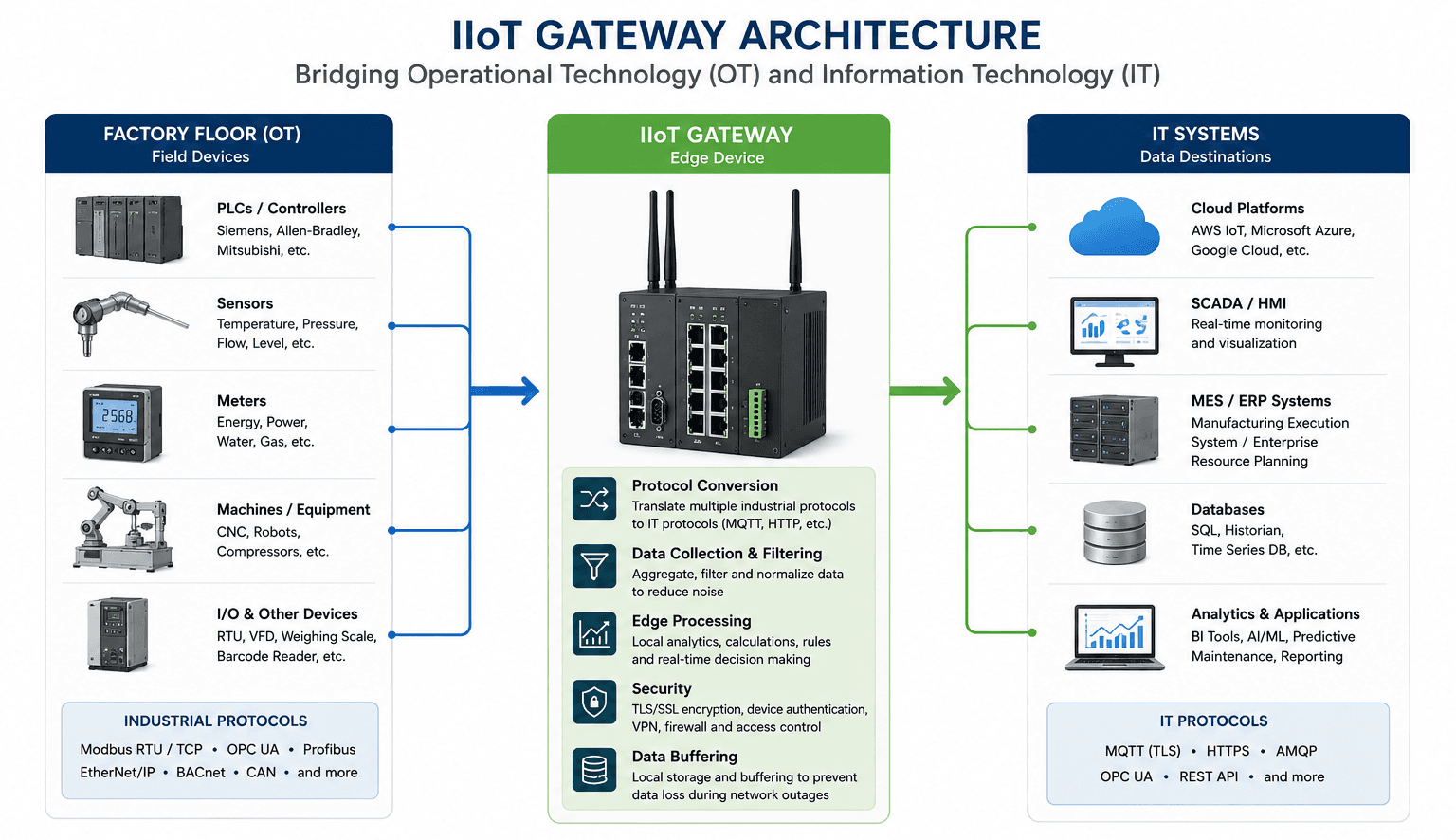 Figure 1: IIoT Gateway Architecture — Bridging Operational Technology (OT) and Information Technology (IT)
Key Features to Consider Before Choosing a Gateway Manufacturer
While some IIoT gateways are designed for basic connectivity, others can include additional features such as security, edge processing, remote management, and cloud integration. When comparing IIoT gateway manufacturers, it is important to be aware of these different capabilities and their impact on effectiveness, scalability, and overall value of any IIoT deployment.
MQTT Support
MQTT (Message Queuing Telemetry Transport) is a lightweight messaging protocol that is extensively used in IIoT applications for efficient data transmission between machines, cloud platforms, on-premises brokers, and monitoring systems. Its low communication overhead combined with suitable Quality of Service (QoS) configurations can ensure reliable communication in industrial data transmission.
When evaluating firmware from different manufacturers of gateways, you should consider items including support for MQTT over TLS, client authentication, compatibility with the cloud and other monitoring systems, and the ability to publish and subscribe to multiple topics.
TLS Security
Also known as SSL/TLS, Transport Layer Security (TLS) encrypts data transmitted between devices, gateways, and cloud applications. In most cases, factory gateways are expected to provide the communication link between factory equipment and external systems; therefore, its ability to provide a secure gateway is particularly important.
Claiming TLS support alone is not enough. Manufacturers are also expected to offer certificate management capabilities and verified secure communication functionality. Further steps such as secure boot, signed firmware updates, secure management interfaces, and access control can be considered for supplementary protection.
Protocol Compatibility
Many industrial environments will have equipment from multiple vendors and several generations of technology using various communication protocols. Examples include Modbus RTU, Modbus TCP, OPC UA, and many Ethernet-based protocols.
A good gateway should be able to interface with the most common and well-used types of industrial equipment, and will be able to perform protocol conversion between systems when applicable. Supporting a large number of protocols allows for easier integration of legacy and current systems/equipment into one unified connected environment.
Edge Computing Capability
Edge computing refers to processing data near its point of generation rather than directing all information to a remote cloud platform, allowing some tasks to be performed locally before being transmitted over a network.
Modern gateways are capable of performing several edge computing tasks. These include autonomous polling, local data filtering, data transformation, threshold-based alerts, and basic rule execution. By implementing these features, network traffic is reduced and response times are improved, while only meaningful data is transmitted to systems at higher levels.
Reliability and Industrial Durability
One of the key expectations of an IIoT gateway is that it will operate continually under challenging factory conditions. For operational stability, IIoT gateways typically include watchdog functionality, offline data caching, backup communication options, and industrial-grade power supply compatibility. Furthermore, many models also support extensive operating temperature ranges. Physical factors like DIN-rail mounting, enclosure protection, and relevant industrial certifications are also worth considering based on the site of deployment.
Reliability must be weighed equally with functionality when evaluating manufacturers, since even gateways with the broadest array of features have no practical value if they cannot produce reliable performance for an extended duration of time.
Platform Integration and API Support
A majority of IIoT gateway deployments necessitate integration with any existing SCADA systems, MES platforms, databases, analytics tools, or cloud services. The ability of a gateway to communicate easily with a third-party application influences its level of deployment complexity.
Manufacturers who provide thorough documentation for their APIs and multiple options for integration assist in simplifying future expansions. Compatibility with popular industrial and cloud platforms can also support the long-term growth of the company through future expansions and custom solutions.
Remote Management and Firmware Updates
Although it may be easy to manage one gateway with a single connection to the corporate network, as deployments increase to include multiple production lines or numerous facilities, it will become progressively less easy to manage each individual gateway.
Remote management capabilities offer administrators the advantage of configuring, troubleshooting, and monitoring devices without accessing it physically. Manufacturers who provide Over the Air (OTA) and Firmware Over the Air (FOTA) update support, signatures for the firmware, and rollback mechanisms assist in maintaining devices and significantly increase long-term security and manageability.
Vendor Support and Documentation
The manufacturer's documentation and technical support can have a significant effect on deployment success. A setup guide, troubleshooting resources, API documentation, and examples of configuration will help to speed up implementation and to simplify post-implementation maintenance.
Consumers need to evaluate just more than product specifications. Vendor responsiveness to technical support queries, availability of training resources, and commitment to long-term product support are equally important for a successful deployment. Good vendor support is very helpful when deploying gateways in large volume industrial environments.
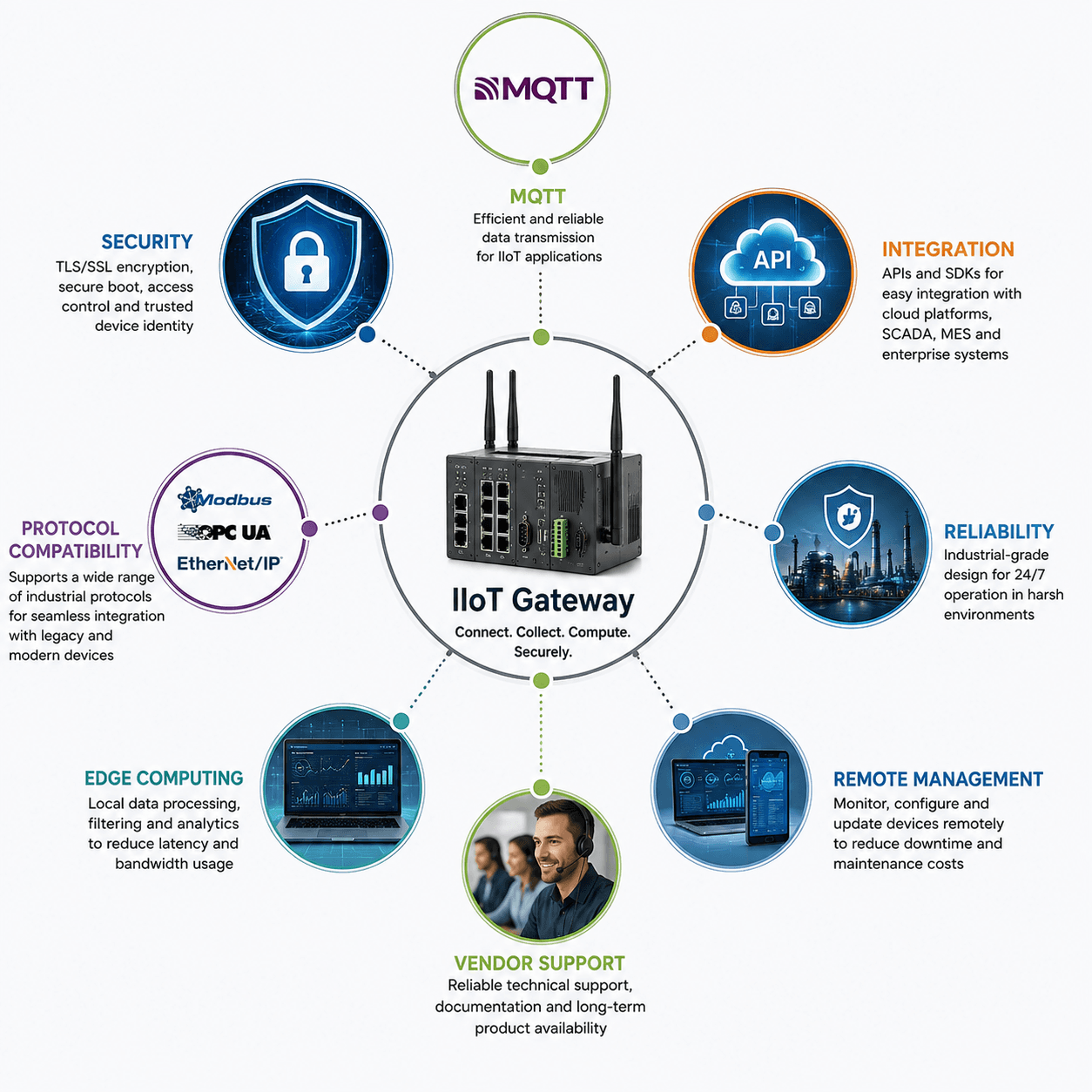 Figure 2: Key Features to Consider When Choosing an IIoT Gateway Manufacturer
Choosing Gateway Manufacturers Based on Factory Requirements
As the specific needs for IIoT gateways vary by factory, no universal solution exists that can meet the requirements of every factory environment. To zero in on the most suitable choice requires the assessment of factors such as current infrastructure, connectivity requirements, scalability objectives, operational constraints, and long-term digitalization plans. Instead of comparing manufacturers based on specifications alone, it is often more practical to review them based on their application and environment-specific capabilities.
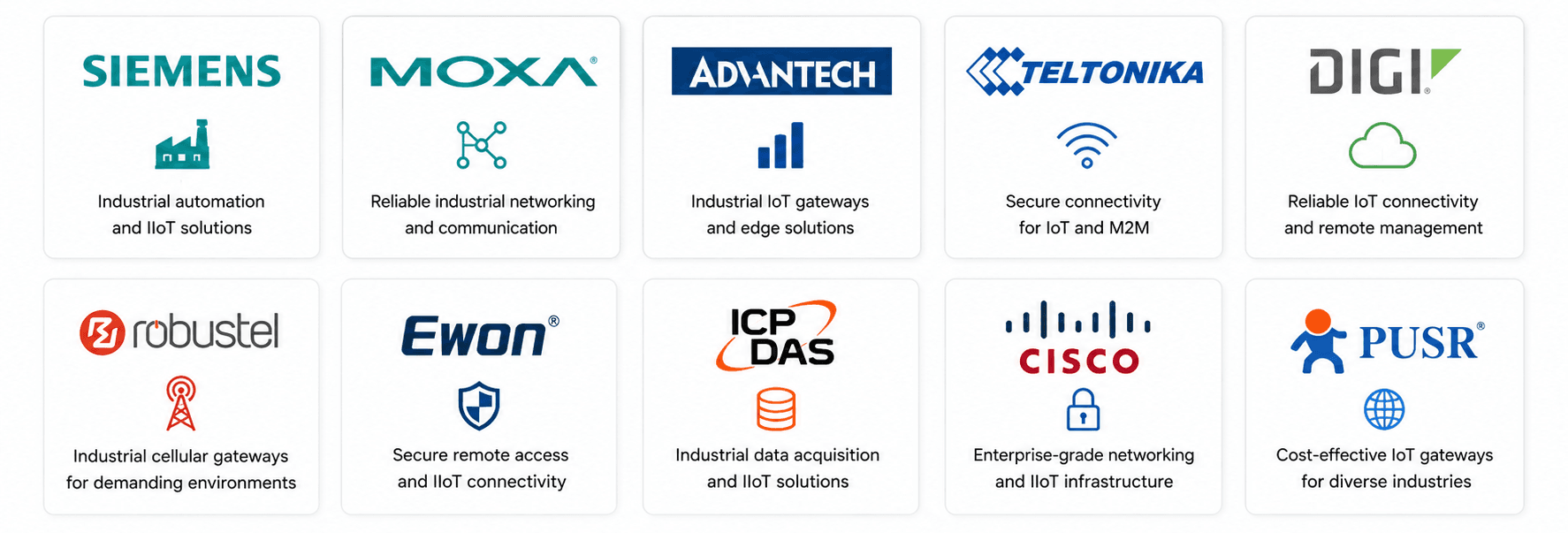 Figure 3: Leading IIoT Gateway Manufacturers
Legacy-Heavy Manufacturing Environments
Many factories still continue to operate via equipment that was installed years or even decades ago. Therefore, these setups often consist of a mixture of PLCs, controllers, and machines that use different communication standards, making integration to a unified framework a challenging undertaking.
Commonly considered manufacturers include:
- Siemens — A solidly integrated part of SIMATIC's automation platform. Provides support to a wide range of industrial protocols for communications. Often considered by factories that currently run on Siemens PLCs and their automation platforms.
- HMS Networks (Ewon) — Known for its remote access/maintenance capabilities. Commonly considered for brownfield modernization projects. Frequently used to connect older equipment to modern monitoring systems.
- ICP DAS — Cost-effective protocol conversion and I/O connection options. Provides a good selection of industrial communication standards. Commonly used in smaller to medium size industrial applications with a need for easy integration options.
Cloud-Connected Smart Factories
Factories looking forward to transitioning to cloud-based monitoring, analytics, centralized dashboards, and Industrial IoT platforms often require gateways that support modern communication protocols and secure cloud connectivity.
Manufacturers worth considering include:
- Advantech — Solid integration of edge to cloud, edge computing. Used in data-heavy smart factory scenarios.
- Moxa — Strong industrial networking and protocol integration capabilities. Often used for advanced digitalization of industry work.
- Siemens — Integrates closely with Siemens automation ecosystems. Suitable for factories that are already using Siemens platforms.
- Robustel — Strong cellular connectivity and remote monitoring capabilities. Supports MQTT, VPN, and cloud communications.
- Teltonika — Affordable industrial connectivity. Efficient support for remote management and cellular networks.
- Digi International — Provides good security and device management capabilities. Mostly suitable for large scale industrial IoT service.
- USR IOT (PUSR) — Affordable MQTT and protocol conversion devices. Known for fast and low-cost deployments.
Harsh Industrial Environments
For industries that operate in demanding conditions which involve temperature extremes, electrical noise, vibration, humidity, or dusty environments, hardware reliability and environmental durability often play a major role in determining the best IIoT gateway.
Commonly considered manufacturers specializing in tough work conditions include:
- Moxa — Offers networking and protocol conversion solutions for rugged and industrial environments. Well known for fulfilling the needs of highly demanding industries.
- Advantech — Provides industrial-grade hardware with edge computing capabilities. Frequently used in harsh manufacturing and automation applications.
- Cisco Industrial — Provides agreeable industrial networking and cybersecurity capabilities. A frequent choice in any enterprise-scale industrial infrastructure.
Edge-Heavy Applications
Some IIoT applications require data filtering, event detection, analytics, or decision-making to be performed closer to the point of generation as opposed to cloud-based processing.
Commonly considered manufacturers include:
- Advantech — Powerful edge computing platforms that support a variety of technologies, such as Node-RED and Docker. Suitable for data-intensive applications requiring local processing.
- Siemens — Edge-enabled solutions coupled with extensive industrial automation system integration. A widely used choice for production facilities utilizing Siemens automation platforms.
- Moxa — Combines industrial connectivity with local data processing capabilities. An ideal choice for low-latency applications and reduced reliance on the cloud.
Remote and Distributed Operations
Utilities, water treatment, logistics, mining, and agriculture-like industries often manage equipment spanned across several sites. Therefore, emphasis is on remote connectivity, centralized management, and reliable communication.
Notable manufacturers catering to needs on this line include:
- Robustel — Agreeable cellular connectivity and VPN support in addition to being able to have remote manage capabilities. Designed and built for the remote monitoring of industrial assets across distributed locations.
- Teltonika — Provides a low-cost solution to industrial networking that is also good at cellular communications. Frequently used in geographically dispersed deployments requiring centralized management.
- Digi International — Strong security features and device management platforms. Ideal for long-term reliability, centrally managed and deployed at a large scale, across multiple locations.
Cost-Sensitive and SME Deployments
Small-to-medium-sized manufacturers often go with options that improve connectivity and shop floor visibility without a large initial investment. The priorities of this type of setups include: ease of implementation, reliability, and cost-effectiveness while still being able to support future developments to a certain extent.
Commonly considered manufacturers that provide cost-sensitive IIoT gateway solutions include:
- USR IOT (PUSR) — Cost-effective IoT gateway solutions for industrial applications with embedded support for the MQTT protocol and protocol conversion. Well-suited to be used in pilot projects and more limited-sized IIoT deployments.
- Teltonika — Provides economic industrial networking and connectivity solutions. Provides a balance of functionality, reliability, and deployable cost.
- Robustel — Industrial cellular gateway solutions with flexible remote connectivity options. Suitable for organizations seeking scalable options without significant investment on infrastructure.
Manufacturers such as PUSR, Teltonika, and Robustel are often thought of as cost-effective options, especially for pilot projects and small-scale deployments. That said, gateway selection should also consider factors such as long-term reliability, technical support, maintenance requirements, and future scalability. These factors are broadly covered by enterprise-focused manufacturers such as Siemens, Cisco, and Advantech, which justify a relatively higher overall investment.
Edge-Intelligent vs Transparent Gateways: When to Use Each
While some IIoT gateways are designed to pass data from devices to monitoring systems, there are others which are able to perform localized data processing and decision-making tasks. Understanding the distinction between these two types of gateways can aid factories in selecting a gateway that matches their operational requirements.
Transparent Gateways
The main focus of transparent gateways is connectivity. They collect data from industrial equipment and forward it to monitoring systems, databases, or cloud platforms while performing protocol conversion and basic mapping, minimizing any additional processing involved. These gateways usually support protocol conversion and machine-to-cloud communications, while sticking to a fairly simple deployment architecture.
Common advantages of transparent gateways include:
- Lower deployment complexity
- Simpler configuration and maintenance
- Generally lower hardware cost versus an edge-intelligent gateway
- Suitable for basic monitoring and data collection applications
Transparent gateways are often a good choice when the main target is to connect equipment to a monitoring platform without requiring significant local data processing. However, they can fall short in applications that require robust data filtering, real-time local responses, or operate with limited cloud connectivity.
Edge-Intelligent Gateways
Edge-intelligent gateways are capable of performing additional processing at the device level before sending it over to external systems. In addition to forwarding data, these gateways can also collect, filter, transform, and analyse data on-site.
Common capabilities include:
- Autonomous data polling
- Filtering and aggregating local data
- Data transformation and reporting
- Threshold-based alerting
- Basic analytics and rule execution
- Buffering local data during communication outages
By processing data closer to its source, edge-intelligent gateways can significantly reduce unnecessary network traffic while improving response times for operational procedures.
These kinds of gateways are often preferred in large-scale monitoring deployments, applications with high data volumes, and situations where local decision-making is beneficial.
Choosing Between the Two
The choice of using either a transparent or an edge-intelligent gateway depends upon several factors; these include application complexity, volume of data, latency needed, bandwidth limitations, and the degree of cloud dependency acceptable for the deployment.
A transparent gateway may be suitable if:
- The primary requirement is machine connectivity and cloud visibility
- Data volumes are relatively modest
- Lower deployment complexity is preferred
- Local processing is not a critical requirement
An edge-intelligent gateway may be suitable if:
- Local filtering, analytics, or alert generation is required
- Large volumes of operational data are being collected
- Network bandwidth is limited or expensive
- Reduced cloud dependency is desirable
- Fast local responses are important
While transparent gateways may meet basic factory requirements for connectivity and visual access to the cloud, edge-intelligent gateways may offer the most benefits as the number of deployments grows and the volume of operational data increases. Edge-intelligent gateways enable local processing, reduce the amount of bandwidth being used, and allow for much better scalability. Instead of assuming that the "most advanced" gateway will always be the best option, companies should consider which gateway architecture matches their current monitoring and operational requirements most closely.
Practical Deployment Considerations
Selecting the right manufacturer for a gateway is a small piece in the puzzle of a successful IIoT deployment. Proper implementation planning can significantly reduce integration problems. It can also significantly increase long-term operational benefits. In addition, security considerations, such as establishing network segmentation, access control, etc., should also be considered early in the process, especially when connecting operational technology (OT) systems to business or cloud networks.
Start With a Focused Pilot
Rather than connecting an entire factory at once, many organizations begin with a single production line, process, or group of critical assets. This allows teams to validate connectivity, data quality, and operational benefits before expanding the deployment to other areas of the facility.
Consider Physical Installation Requirements
Practical installation factors are often overlooked during planning. Available DIN rail space, power supply requirements, antenna placement for wireless communication, and environmental conditions such as temperature, vibration, and humidity should all be considered before deployment.
Connectivity should also be tested within the actual factory environment, as metal structures, distance, and electromagnetic interference can affect network performance.
Plan for Future Expansion
While a gateway may initially be deployed to monitor a small number of machines, future requirements often include additional production lines, equipment, or monitoring applications. Selecting solutions that can accommodate future growth can help avoid unnecessary system redesigns as the deployment expands.
Define Operational Ownership
Industrial IoT gateways require ongoing management throughout their lifecycle. Defining responsibility for device configuration, monitoring, maintenance, and updates helps ensure the system remains reliable over time. Depending on the organization, this responsibility may fall under automation, maintenance, operations, or IT teams.
Establishing a maintenance plan that includes system updates, configuration backups, and periodic health checks can further support long-term reliability.
Careful planning during deployment can help maximize the value of an Industrial IoT gateway while reducing implementation challenges as the system grows.
Conclusion
Industrial IoT gateways play a major role in connecting factory equipment, bridging communication gaps between legacy and modern systems, and contributing to greater operational visibility. Therefore, deciding on the right gateway manufacturer involves more than just a comparison of tech specifications. Factors such as current infrastructure, scalability options, deployment conditions, and long-term operational goals should also be considered.
As factories become more connected and data-driven, Industrial IoT gateways remain a key component in enabling reliable communication between the factory floor and higher-level monitoring systems. By aligning gateway capabilities with actual operational necessities, manufacturers can build a solid foundation for future digitalization initiatives.
References
- MAISVCH. "What Is an Industrial IoT Gateway?"
- TEKTELIC. "How to Choose an Industrial IoT Gateway."
- PUSR. "Deployment and Maintenance Strategies for Industrial IoT Gateways."
- IoTRouter. "The Difference Between Edge Gateway and Ordinary Gateway."
- Ubidots. "Industrial IoT & Edge IoT Gateways: 10+ Best Models for 2025."